
Is Economics a Science?
The evidence suggests...probably not.

Whilst, since 1968, the Nobel committee awards The Sveriges Riksbank Prize in Economic Sciences in Memory of Alfred Nobel, the inclusion of the word ‘Science’ in the title seems a dubious one.
Steve Keen, Kate Raworth, Jon Erickson and Josh Arley are a sample of economists who challenge the neoclassical economic paradigm and argue that neoclassical economists persist with the their world view despite that it lacks empirical evidence, rely on unsubstantiated assumptions and simplifications, and uses models that demonstrably do not reflect the real world.1
David Slattery, Joseph Nellis, Kosta Josifidis, and Alpar Lasonc describe how two of the foundational concepts of neoclassical economics (General Equilibrium Theory and Efficient Market Hypothesis) are more ideology than science and do not reflect the real world.2
To be a science a discipline must fit the definition of one.
The systematic study of the structure and behaviour of the physical and natural world through observation, experimentation, and the testing of theories against the evidence obtained. (Oxford English Dictionary)
Any system of knowledge that is concerned with the physical world and its phenomena and that entails unbiased observations and systematic experimentation. (Britannica)
Knowledge or a system of knowledge covering general truths or the operation of general laws especially as obtained and tested through scientific method. (Merriam Webster)
The scientific method is an empirical method for acquiring knowledge through careful observation, rigorous scepticism, hypothesis testing, and experimental validation. (Wikipedia)
The eight authors cited above demonstrate, through reasoned argument, that economics does not fit these definitions of a science, since it continues to rely on models and assumptions that do not hold up in the real world and provides little predictive value. For example, there were very few economists who predicted the Global Financial Crisis of 2008 and some, up until that very moment, insisted that everything was OK.
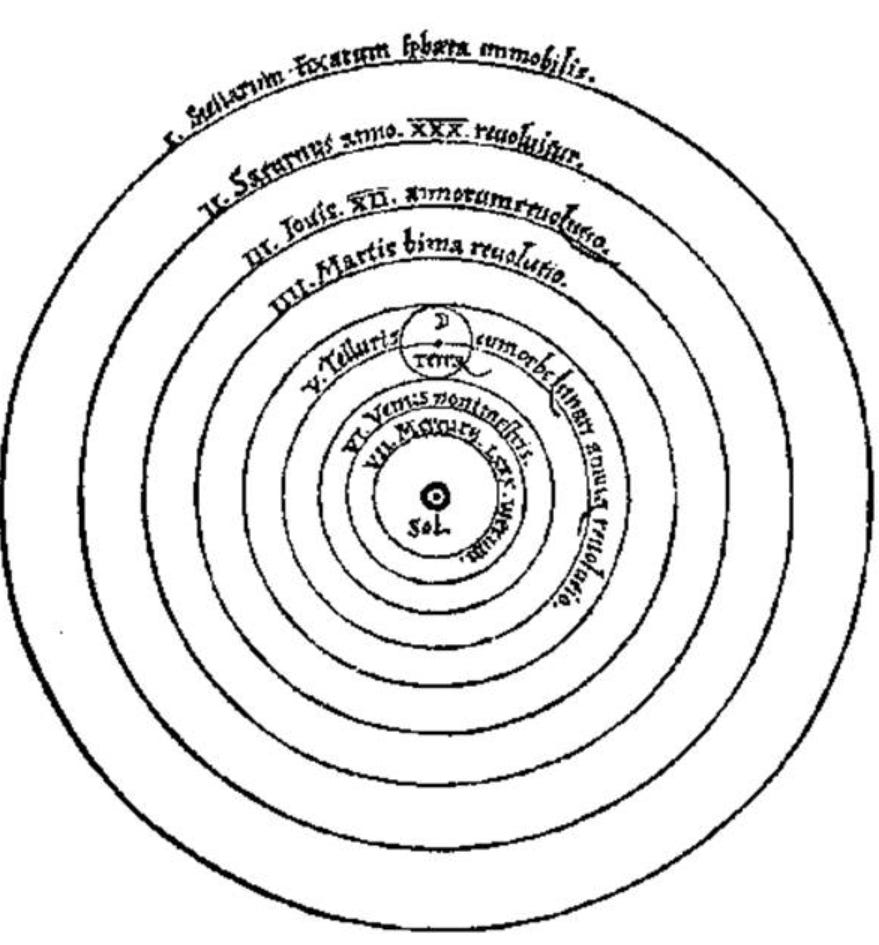
It strikes me that the economic establishment has a parallel with the Catholic church of the 17th century. Galileo, through careful observation and reason, was able to demonstrate that the earth and planets revolved around the sun and not the other way around. Yet Galileo was threatened with torture, forced to formally recant his ‘heresy’, and placed under house arrest for the remainder of his life. His teachings were banned.
Newton’s model of the mechanics of the universe is still used today, but we know that it does not explain all natural phenomenon. For example, observations of the orbit of planet Mercury do not accord with Newton’s theory. It was not until Einstein’s General Theory of Relativity (to which there was resistance) that a more accurate explanation was attained, a theory which was able to provide a prediction of Mercury’s orbit and find that it matched real-world observations. It is now accepted as a better model for understanding the mechanics of the universe.
It seems that many challenges to the prevailing economic orthodoxy are expelled as heresy. That may be too strong. But the seeming refusal to develop better theories that reflect real-world observation (or indeed include the environment in the models) is myopic at best, possibly self-serving, and given the influence on the thinking of policy makers, advisors and politicians when it comes the environment and climate science, potentially very dangerous for life on earth.
To be sure, scientists can also become wedded to the established wisdom and stuck in their own paradigms; they are as human as economists. But usually, once a theory is shown to be a poor reflection of the real world, they go in search of a new one.
And to be fair, economics is difficult because of the complexity of the interactions between people and the systems in which we live. In many ways, physics for example, is much simpler.
But that is an argument for dealing with economics as a complex, systemic discipline, not as one that persists with demonstrably flawed models, that relies on simplifying assumptions that belie its complexity, and which neither reflects reality nor provides much predictive value.
https://www.thegreatsimplification.com/episode/rr03-erickson-farley-raworth-keen
Slattery, D., Nellis, J., Josifidis, K., Lasonc, A. (2013). Neoclassical economics: science or neoliberal ideology? European Journal of Economics and Economic Policies: Intervention, Vol. 10 No. 3, 2013, pp. 313–32
6